Funded, not announced
The legal structure is more constrained than assumed, but it is a solved problem. Non-citizens, and any entity with so much as one dollar of foreign capital, can never hold freehold land in Kenya. Only leasehold, capped at 99 years, no exception. This isn't a workaround situation: it means every Kenyan position is a long lease, not a land purchase, and every return model has to be run on that basis.
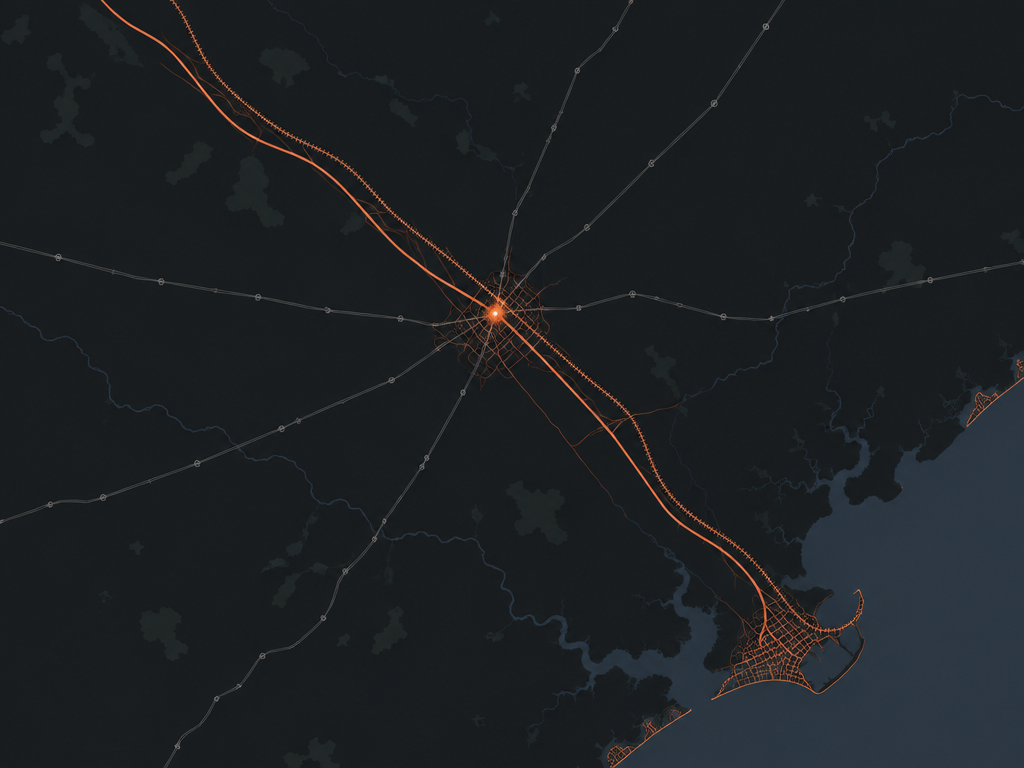
"The corridor" is not one investable unit. Node selection is the whole game. Voi, on the Nairobi-Mombasa SGR line, has visibly re-rated from station-anchored tourism and commerce. Mito Andei, a few hundred kilometres away on the same railway, was bypassed and its hospitality economy collapsed. Identical catalyst, opposite outcome. Proximity to infrastructure means nothing without being on the side of it that captures the new pattern of movement.
Real, delivered catalysts already exist. This isn't a forecast. The Mariakani 400/220kV substation (over 1,000MW) was energised in December 2025. Mombasa port handled 45.45m tonnes in 2025, up 10.9% year-on-year. These are facts on the ground today, not masterplan promises, and they sit alongside a population still in the steep part of the urbanisation curve (about 27% urban, growing around 4.2% a year).
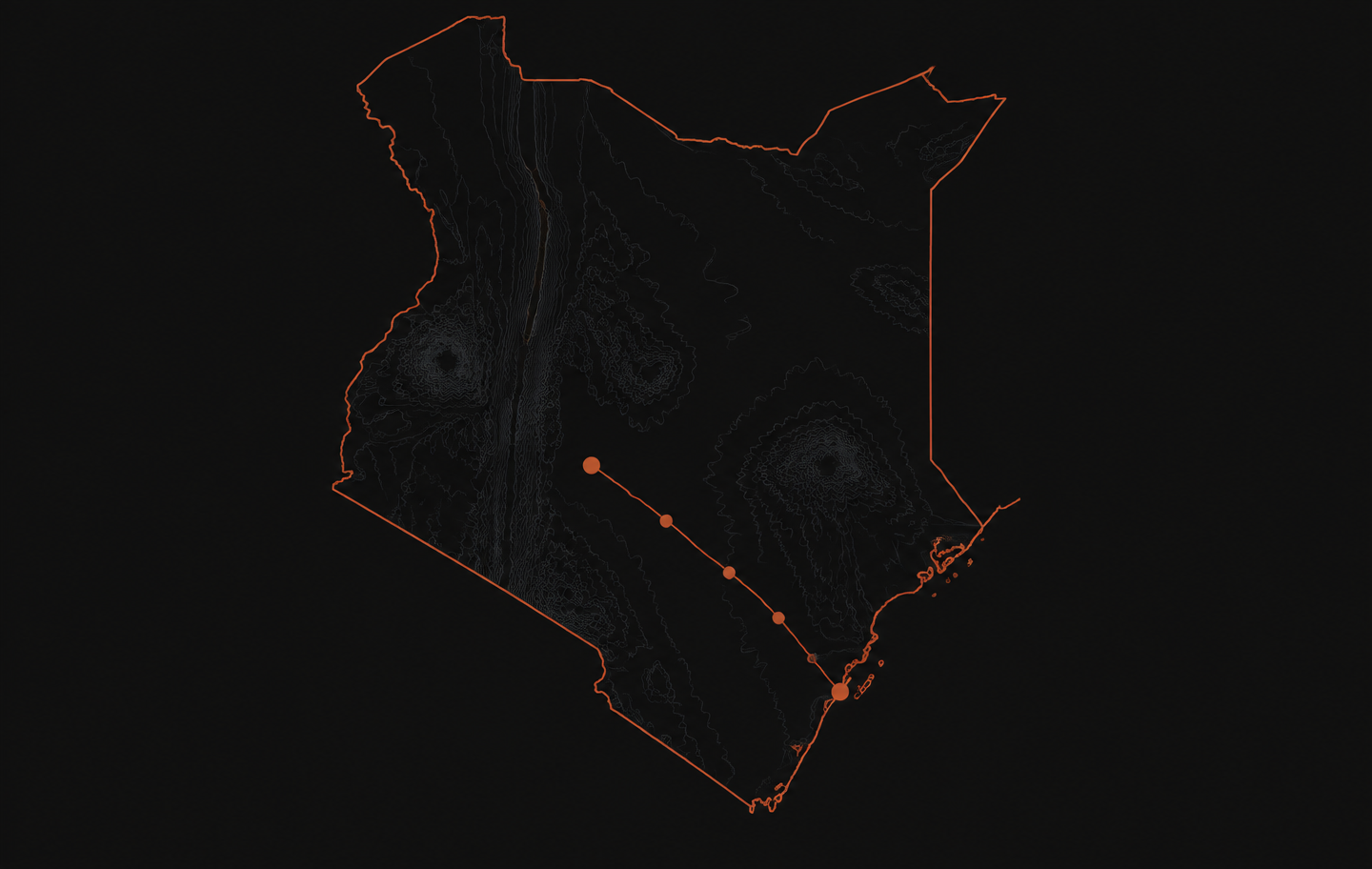
Kenya still clears the thesis's core screen better than most alternatives, not because it is easy, but because it is the market where "funded, not announced" can actually be tested against hard evidence, node by node.
How the shortlist was built
Twenty-three distinct Kenyan locations were screened against the thesis. Six survived as investigate, monitor, or genuinely promising-but-under-evidenced. Four were taken further: priced with live listings, checked for delivered-versus-funded-versus-announced infrastructure, and tested against real population and growth data rather than a masterplan.
The discipline applied to all four. Funded, not announced. Every catalyst is classified as delivered, funded-and-underway, or merely announced, and treated accordingly. A road that's "promised for January 2026" and sitting at 25% complete is not a delivered catalyst; it's a risk to underwrite against. Priced, not assumed. Each location carries a live-listing price sample (September 2026) converted to $/sqm, not a figure carried forward from an old desk screen.
What was deliberately excluded. Nairobi, already priced by institutional capital, the opposite of FrontieRE's pre-discovery edge. Diani, Kilifi and Watamu, already discovered coastal lifestyle markets, wrong asset class. Konza, where roughly $696m of public investment hasn't converted to private demand and its own development authority's CEO confirms investors want existing buildings, not raw land. Kibiko, adjacent to Kimuka on the same road, but sitting on a parcel with an active ~Sh100bn land-fraud dispute and real violence, carried only as a cautionary case study, never a candidate.
Why these four, specifically.
Mariakani, the only location with a delivered power catalyst and a real, operating industrial base (three named manufacturers plus a car-assembly plant under construction) rather than a projected one.
Voi, the clearest evidenced re-rating on the shortlist, with a second, larger catalyst (a revived cross-border railway and dry port) this research uncovered independently of the original screen.
Dongo Kundu periphery, the cheapest entry price of the four, sitting on a genuinely delivered bypass road, with real optionality on a $1bn-financed SEZ whose own internal timeline is still the biggest open question.
Kimuka, the deliberate outlier: a Nairobi-outskirts alternative to the coastal corridor, chosen for demographic exposure (Kajiado's sub-counties are growing 48-59% per decade) rather than a single infrastructure bet, and priced well below Ngong and Kiserian next door.
Read this before the next section. None of the four is a sure thing. Each carries its own named risk in section V, and this thesis is built to say so plainly rather than paper over it, consistent with the "funded ≠ built" discipline the country-level research already established.
Different catalysts, different stages, one discipline
Each location was priced independently from live listings (September 2026) and checked against the same funded-versus-announced test. The core tier below is the standard subdivided-plot price, the entry point most directly comparable across all four.
Mariakani
- Catalyst
- Substation delivered Dec 2025 · road dualling funded, ~25% complete, behind schedule
- Core tier
- $6.10-$9.98/sqm subdivided plots
- Growth
- Plot prices +/-60% over 2 years, per a dated 2026 press quote. The best price-growth evidence of the four
- Key risk
- Demand leans on 3 manufacturers; road catalyst has already slipped once
Voi
- Catalyst
- SGR stopover delivered Dec 2024 · Voi-Taveta railway + dry port funded, 70% earthworks complete
- Core tier
- $9.15-$12.15/sqm standard plots
- Growth
- ~900 passengers/week since stopover; ~40% visitor increase since SGR
- Key risk
- No dated land-price growth figure found yet. Re-rating may already be partly priced in
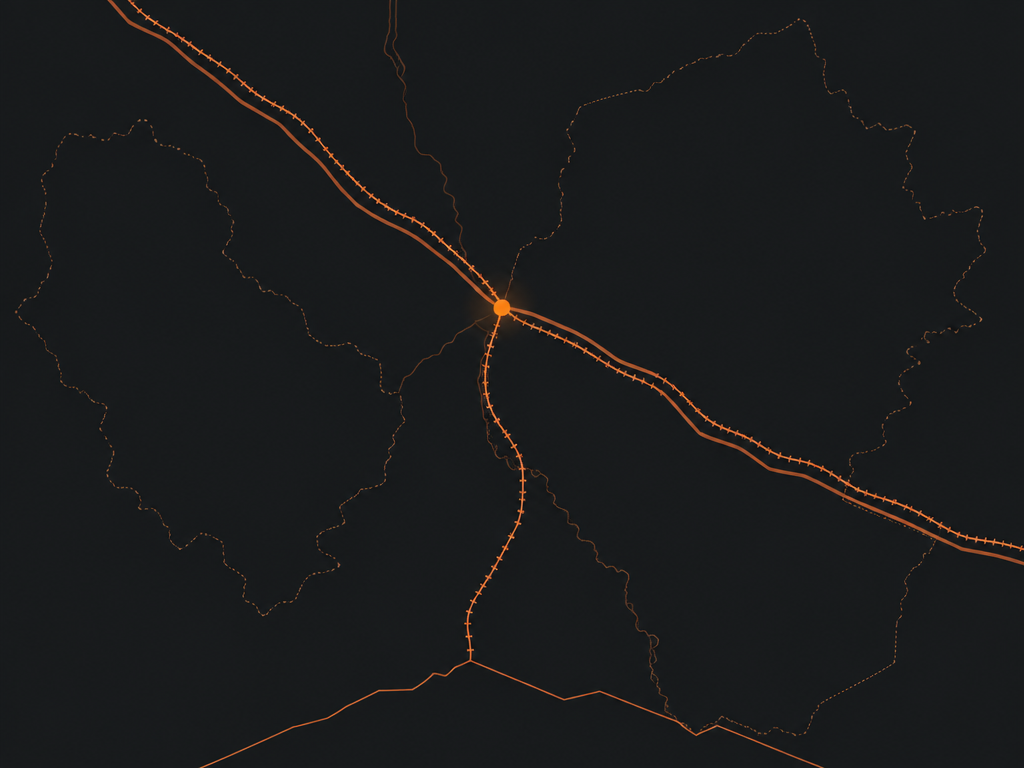
Dongo Kundu Periphery
- Catalyst
- 18km bypass delivered Aug 2024 (over 60% of ferry traffic diverted) · SEZ access road status genuinely unclear
- Core tier
- $7.07-$27.50/sqm, bypass corridor
- Growth
- Likoni sub-county population +/-4.2%/yr (2009-2019), the cleanest demographic figure of the four
- Key risk
- SEZ itself is a near-decade-old zone with a mixed delivery record; conflicting road reports
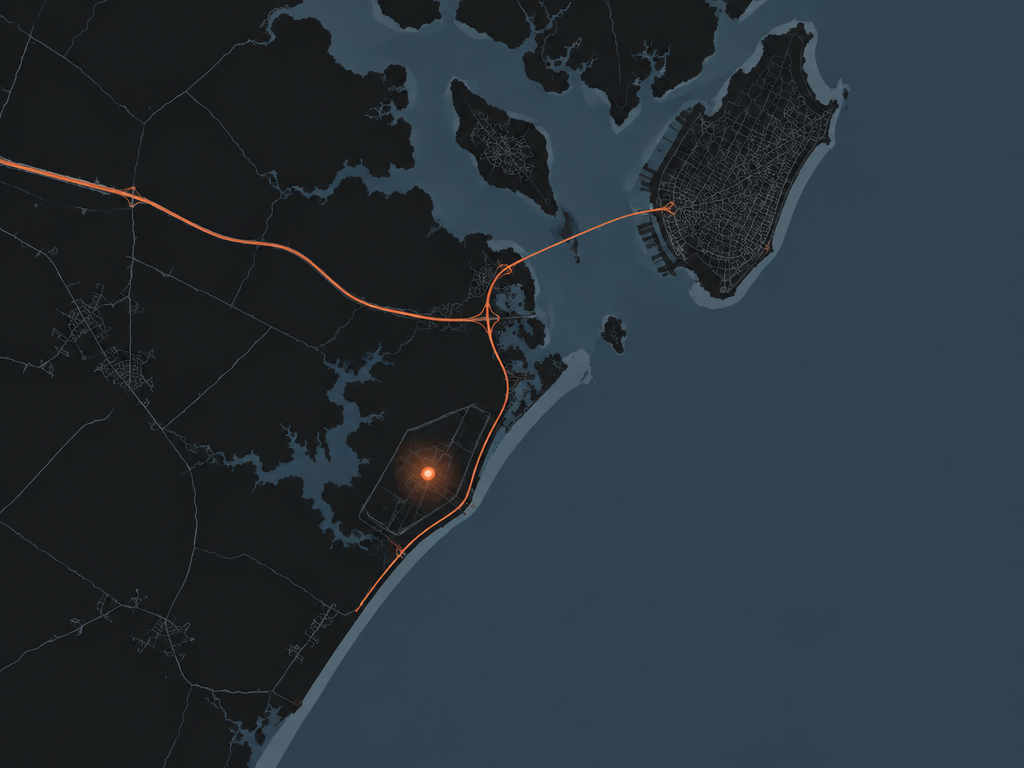
Kimuka
- Catalyst
- Road delivered but resurfaced twice in under a decade · no rail reaches here (corrects an earlier assumption)
- Core tier
- $8.32-$26.63/sqm subdivided plots
- Growth
- Kajiado West +47.9%, Kajiado North +58.5% (2009-2019 census), well above the national rate
- Key risk
- Weakest single infrastructure catalyst of the four; Kibiko fraud case sits on the same road
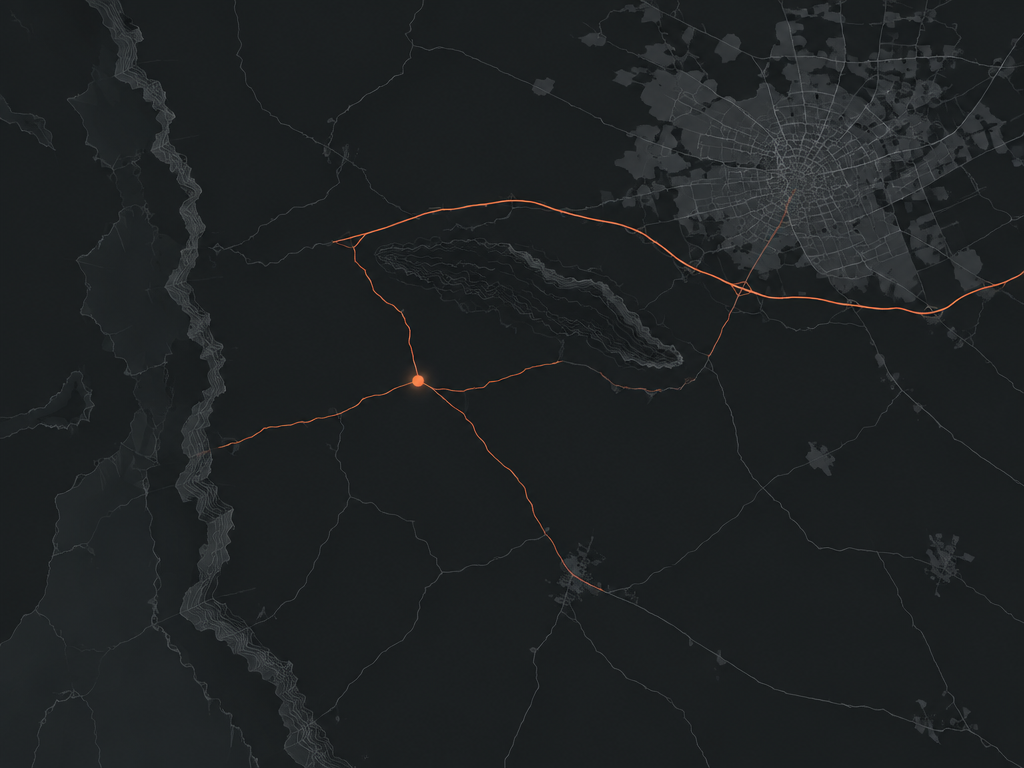
| Location | Core tier ($/sqm) | Strongest evidence | Status of the catalyst |
|---|---|---|---|
| Mariakani | $6.10-$9.98 | Dated price-growth quote (+60%/2yr) | Power delivered, road slipping |
| Voi | $9.15-$12.15 | Two independent, multiply-sourced catalysts | Stopover delivered, rail 70% built |
| Dongo Kundu periphery | $7.07-$27.50 | Cleanest population growth figure | Bypass delivered, SEZ unclear |
| Kimuka | $8.32-$26.63 | Strongest demographic growth (+48-59%/decade) | Road delivered, imperfect; no rail |
Four different bets on the same country, on purpose
The power-law thesis doesn't need every position to work. It needs enough uncorrelated positions that when a handful re-rate, they carry the rest. These four were chosen because their catalysts are genuinely different in kind, not because each one is individually the safest bet available.
Four different catalyst types. Mariakani is industrial and power-anchored. Voi is transport and tourism-anchored, with a second rail catalyst. Dongo Kundu is port and SEZ optionality. Kimuka is pure demographic and commuter exposure, no single dominant catalyst. A failure mode in one (a stalled SEZ, a slipping road) doesn't propagate to the others.
The risks, named plainly
Title fraud and boundary interference. 63.3% of surveyed Kenyans report experiencing it; there is no meaningful title insurance market to fall back on. Protection has to come from the due-diligence process itself.
Two of the four catalysts have already slipped once. Mariakani's road (promised January 2026, ~25% built) and Dongo Kundu's SEZ access road (status disputed in press five days apart). "Funded" is not "on schedule."
The evidence base is asymmetric. Mariakani has a real price-growth data point; Voi and Dongo Kundu don't yet. A leading-indicator scorecard (branded retail, bank and fuel presence, press coverage of local growth) is in progress to close this gap without relying on invented appreciation curves.
None of these four is a sure thing on its own. That's the point. The portfolio is built so that it doesn't need to be.